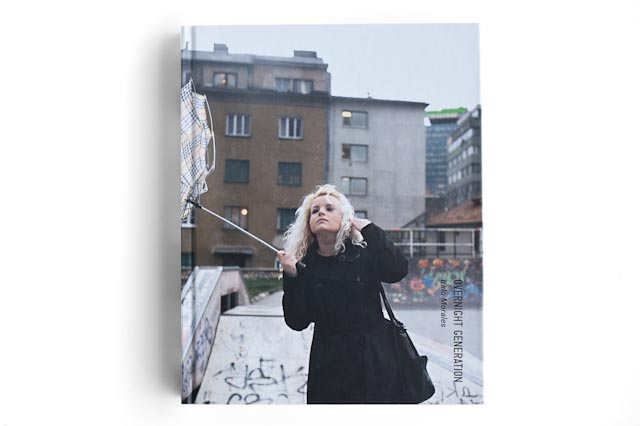
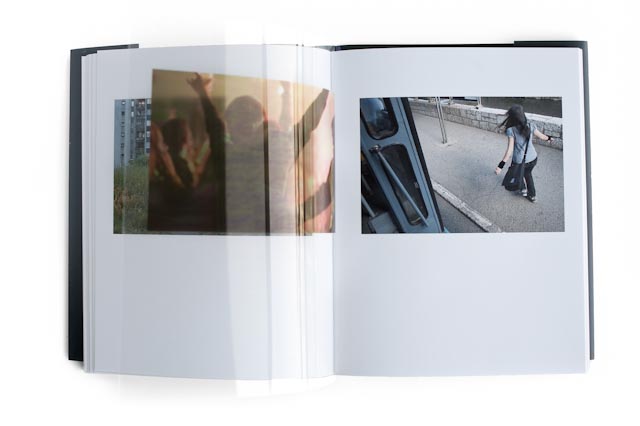
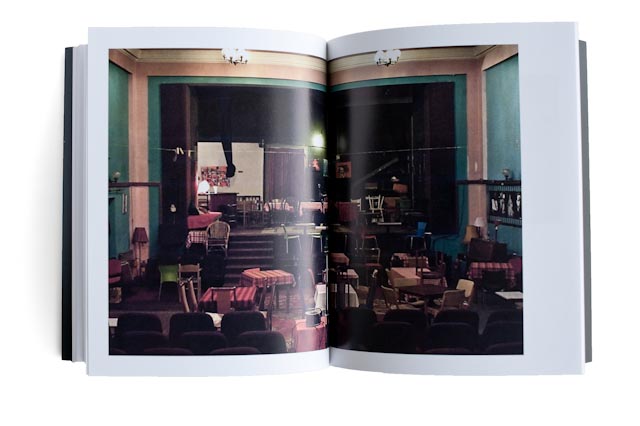
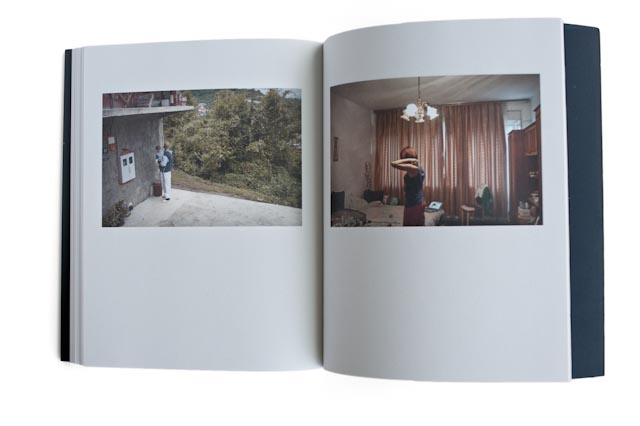
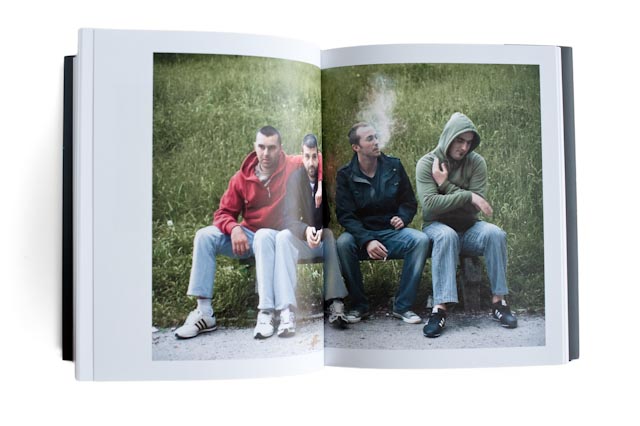
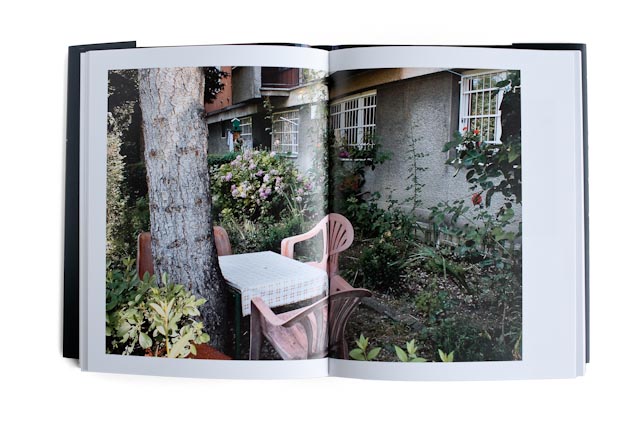
Overnight Generation is a compelling long-term documentary photobook project by Italo Morales that serves as a poignant portrait of Sarajevo and a tribute to the young adults who came of age in the aftermath of the Bosnian War. Self-published in 2012 in collaboration with German publishing house Verlag Kettler, the work eschews traditional war-torn imagery, instead focusing on the “subtle violence” of a post-conflict existence and the lingering, generational trauma affecting those who grew up in the ruins of the 1990s siege. Through intimate portraits and atmospheric captures, Morales documents the complex identity of a youth demographic caught between a heavy historical legacy and a desire to integrate into the modern West. The project gained significant critical acclaim, winning the C/O Berlin’s Photobook Slam (2012) and receiving nominations for the New York Photo Awards and the Dummy Book Award 2012, ultimately solidifying its place as a sensitive, nuanced exploration of how social and physical landscapes are reshaped long after the fighting has ceased.


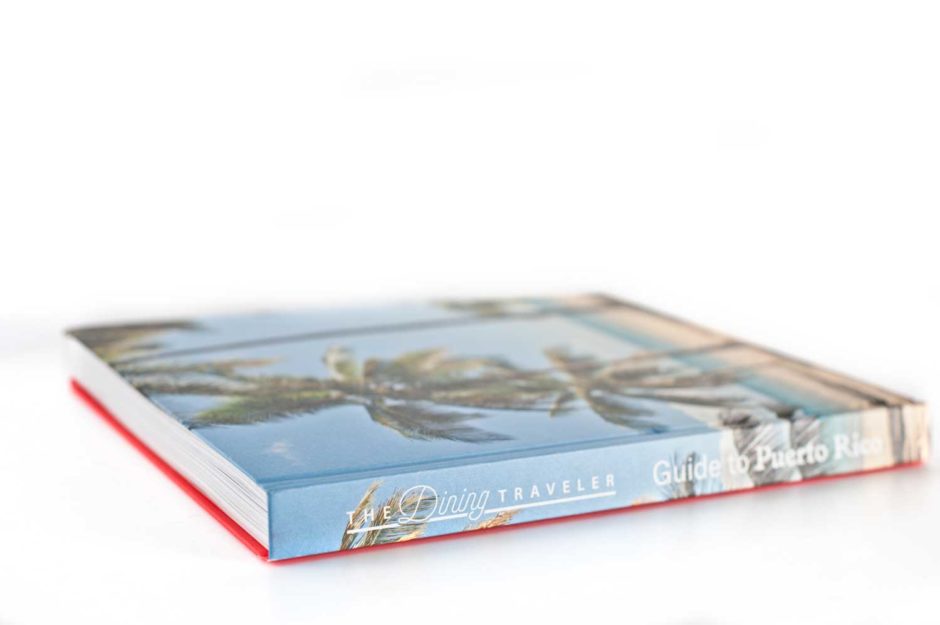
DINING TRAVELER GUIDE TO PUERTO RICO
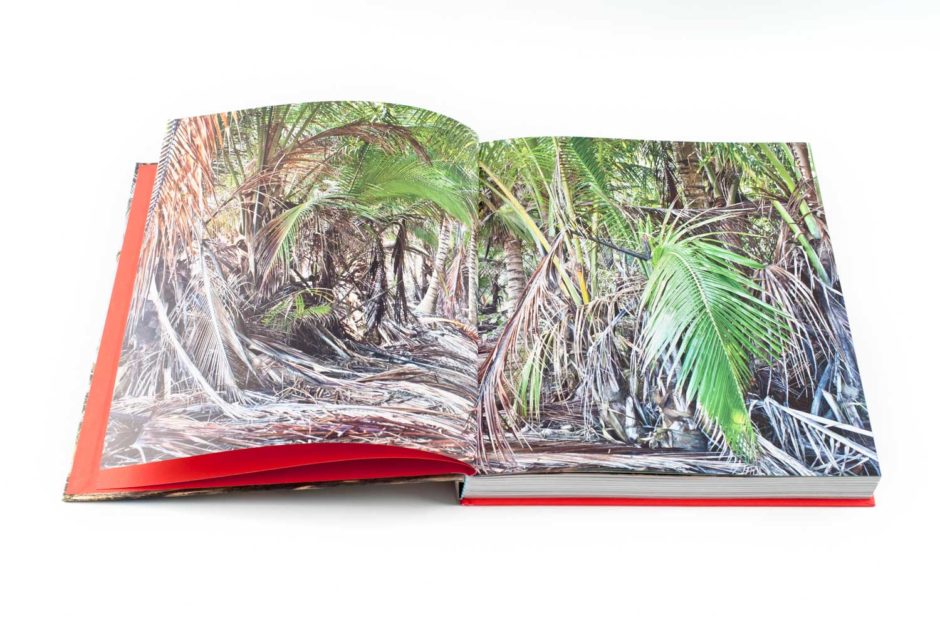
“The Dining Traveler Guide to Puerto Rico takes the reader on a journey across ‘La Isla del Encanto’ with stunning photographs of the island, its people and its food. The North, East, South, West and Center of the Island, as well as San Juan and the outer isles of Vieques and Culebra are featured in separate chapters. With interviews of chefs like José Andrés and other food and hospitality personalities, the book shows the diverse landscapes of the island, its people and the boricua cuisine.”
The monumental public art installation Nuestros Silencios (Our Silences) by Mexican sculptor Rivelino embarked on a high-profile European tour between 2009 and 2011 to promote individual and collective freedom of expression while confronting the realities of censorship. Comprising ten massive, one-ton anthropomorphic bronze busts whose mouths are bound by distinctive metallic plaques, the open-air exhibition traveled through major plazas and cultural capitals including Lisbon, Madrid, Brussels, Potsdam, Rome, London, and Saint Petersburg. Photographer Italo Morales participated directly in the project’s European trajectory, capturing the exhibition’s interactions with its urban backdrops and the public during its vital iterations in Brussels, Rome, and Potsdam. His documentary photography cataloged how these imposing, silent figures recontextualized heavily historic spaces, translating Rivelino’s tangible socio-political critique of human rights and personal liberty into a compelling visual narrative as the installation integrated into the unique architectural landscapes of each city.


VALLE DE BALAS (VALLEY OF BULLETS)
Valle de Balas (Valley of Bullets): A Photographic Chronicle of Caracas is an upcoming, highly personal documentary photobook project by Italo Morales that captures the complex, fractured reality of Venezuela’s capital city. Serving as a conceptual extension of his prior work Overnight Generation, which investigated the lingering legacy of a past war in Sarajevo, this new project turns its lens toward a conflict still actively unfolding—one waged not by opposing armies, but through pervasive fear, political dictatorship, and the slow erosion of daily life. Returning to his home city Caracas after sixteen years, Morales documents a profound societal shift where a thriving middle class has been replaced by a reality of entrapment, severe scarcity, and systemic violence that has metastasized far beyond the city’s sprawling barrios into previously prosperous, privileged spaces. Through a nuanced visual narrative, the work acts as a meditation on memory, nostalgia, and decay, balanced against a defiant, unshakable beauty—particularly embodied by the grace and resistance of Caracas’s women. Ultimately, Valley of Bullets functions as an intimate tribute to the human capacity to adapt and endure, telling the stories of those who refuse to disappear into the silence of a wounded city. The project’s physical sequencing and material structure originally took shape in 2014, when Morales produced a hand-made dummy photobook during the ISSP workshop “The Photobook: from Idea to Completion,” led by Rafal Milach and Ania Nałęcka, in cooperation with Nico Baumgarten at the International Summer School of Photography in Kuldīga, Latvia, from August 2 to 10, 2014.


Held from July 9 to July 21, 2013, at The Photographers’ Gallery in London, FreshFaced+WildEyed 2013 was the sixth edition of the gallery’s annual graduate showcase, dedicated to celebrating innovative and emerging talent from visual arts and photography courses across the UK. A judging panel of industry experts selected 22 finalists from over 300 submissions, curation that highlighted a strong tendency toward pressing political, social, and conceptual themes. The exhibition featured diverse long-form projects, ranging from Julian Bonnin’s and Italo Morales’s examinations of geopolitical conflict and postwar trauma in the Middle East and Eastern Europe, to Daniel Mayrit’s critique of surveillance aesthetics, alongside deeply personal explorations of memory, cultural identity, and the boundaries of the photographic medium itself. Notably, this iteration also marked the first time the gallery incorporated The Wall—the centerpicce of its digital program—to feature multi-media, video, and animated works by contemporary graduates, offering a comprehensive look at the expanding definition of British documentary and fine art photography.

PARADISE EXISTS
A personal document of suffering in the Mediterranean: four fathers, four days, and the grueling reality of the road embedded within the idyllic landscape of Mallorca.
I have been riding bikes my whole life — not as sport, but as instinct. A road bike in Caracas as a kid, handlebars flipped up because that’s how I wanted it. During my student year in Paris in 2002, I rented a bike from the RATP and rode the streets sharing lanes with buses that didn’t know I existed. A city bike bought in Holland near the Belgian border in 2004 that I still ride in Barcelona today, twenty-one years later.
Road cycling came to me late — in the autumn of 2020, through friends who reintroduced me to what I had always known. And when it did, it felt like coming home.
This trip to Mallorca, just one year later, was the proof of that. Shot in October 2021 on a point-and-shoot camera and iPhone during a four-day journey from Barcelona with three other fathers, Paradise Exists strips away the polished veneer of cycling tourism. Presented here as a dummy for an A5 photobook, the project explores the sharp dichotomy of the sport: the breathtaking beauty of the island’s terrain juxtaposed with the visceral, quiet agony of endurance cycling. It is an intimate look at a subculture where paradise is not merely a destination, but a state of mind earned through collective exhaustion.